Author: emilyschwartzspeaks@gmail.com


Not your same, stale time management advice. Get your copy today!
Only $11.99 on Amazon.com
Get Your Copy Today!
$11.99 on Amazon.com
Get Your Copy Today!

$11.99 on Amazon.com
The Power of 5 More Minutes

Big tasks can really suck. Thinking about them, finding the motivation to start them, finding the time to finish them, all of it. But I found a not-so-secret way of dealing with them while running over the past few months.
I know what you’re thinking. “Really Emily? Another blog that has to do with running?” Let me remind you- I’m the least athletic person you know, So any principle, any advice, any system that makes me want to go outside and do semi-strenuous physical activity should, in theory, make you do whatever it is you’ve been putting off as well. So you’re welcome if you read this blog and then go on to invent time travel, or whatever your big goal is.
Going the Distance
Lately I’ve been trying to run longer distances, and turns out, it’s really hard. Here’s the thing though, it WASN’T hard in the beginning. My regular running routine was to run for 30 minutes and then stop. One day I thought, “Hm….could I do 35 minutes instead?” Then when that became my new norm I pushed myself 5 more minutes, and when THAT became the new norm I upped it 5 MORE minutes. Over the course of a few months I was capable of running 60 minutes- one whole hour- at a time.
But that, unfortunately, isn’t the end of the story because a funny thing happened when I started to run for an hour at a time semi-regularly: an hour started feeling like the absolute longest thing in the world. While you’d think it would be getting easier, it felt like it was getting harder.
A Mental Game
I started to look down at my watch, see that only 10 minutes had passed, and second-guess myself. “50 more minutes?! I can’t do that! How can I possibly do that?!” My legs seemed to take a cue from my brain and became tired. Not because they actually WERE tired, but because I was convincing myself that they should be. This hobby was quickly becoming un-enjoyable and I needed a new plan.
How do I harness that excitement from a few months ago when I was working up toward a goal? I wasn’t tired then, I was anxious to see if I could push through to a new milestone. I needed to bring back that thrill of “just 5 more minutes!”
5 More Minutes
….so I did. Here was the new plan: every time I went out running I had to start with 30 minutes and from there, all I had to do was commit to 5 more minutes at a time. At each 5 minute internal I gave myself full permission to stop if I couldn’t keep going and would not consider it a failure. This was a mental game for sure, but one that I knew would make running enjoyable again.
It worked! Inevitably, during the first 30 minutes I think “ok, I’m going to stop at 30. That’ll be it. I’ll be too tired, it’s fine” and once in a while I do stop, but most often I keep going. Sometimes I make it to 45, sometimes 50, sometimes 60, but when I do reach those longer distances I do it without the sense of dread I was feeling before.
Using It In Our Work Lives
So how does this apply to our Time Diet productivity in our work lives? Remember, everything we do is either a Meat (difficult) Vegetable (easy) or Dessert (fun.) If you’re putting off a giant Meat task that’s been on your to-do list for a while, maybe you wrote down something too big.
Step 1: Break up larger Meat tasks
We put up a mental block when we stare at a big task. Even though we KNOW the little steps that make up a big project, it’s really hard to see them through the enormity of the finished product. Don’t forget to break up your Meat tasks into smaller chunks. Yes, it makes for a longer to-do list but you’re much more likely to actually start a big task when you can easily see the smaller components you need to do. These smaller components are like the “5 more minute” chunks I started running.
Step 2: Give yourself permission to stop
When you’re in the middle of a big task, give yourself permission to step away. “Step away time” not only leads to less frustration, but if it’s a creative project, you may even find you get your best ideas when you’re not staring at a blank screen trying to think of them. An important note to remember, however, is that you lose the freedom of step away time when you choose to procrastinate. In the beginning, you have total control over when you start a project, but as the deadline gets closer and closer you have less and less control over your work timeline.
Step 3: Give yourself permission to keep going
Likewise, if you’re really “in the zone” of a task, give yourself permission to keep going, even if it wasn’t planned in your schedule. When you’re in a beautiful state of flow on a project, it can be really hard to get back into it a few days later so if you’re feeling the creative juices flow, run with it. You never know when you’ll get that motivation back.
As for me, I think I’m going to stick with this new running plan for now. I really want to sign up for a half marathon in December, but I have to figure out a different chunking strategy before then. If you’re curious if I’ve personally found benefit in applying this mentality to other things, the answer is “yes” I definitely have. I’ve been knee-deep in presentation design recently and if you’ve ever stared at a one paragraph description of an amazing training you promised to give….and then looked back at your blank PowerPoint slides you know the feeling I’ve been up against. But the “5 more minutes” strategy has really helped push me through, by breaking up the work into tiny bite sized tasks and tackling them systematically.
Has it ever worked for you? Let me know!
For speaking engagements or public speaking coaching, contact Emily@TheTimeDiet.org
How I Won By Failing
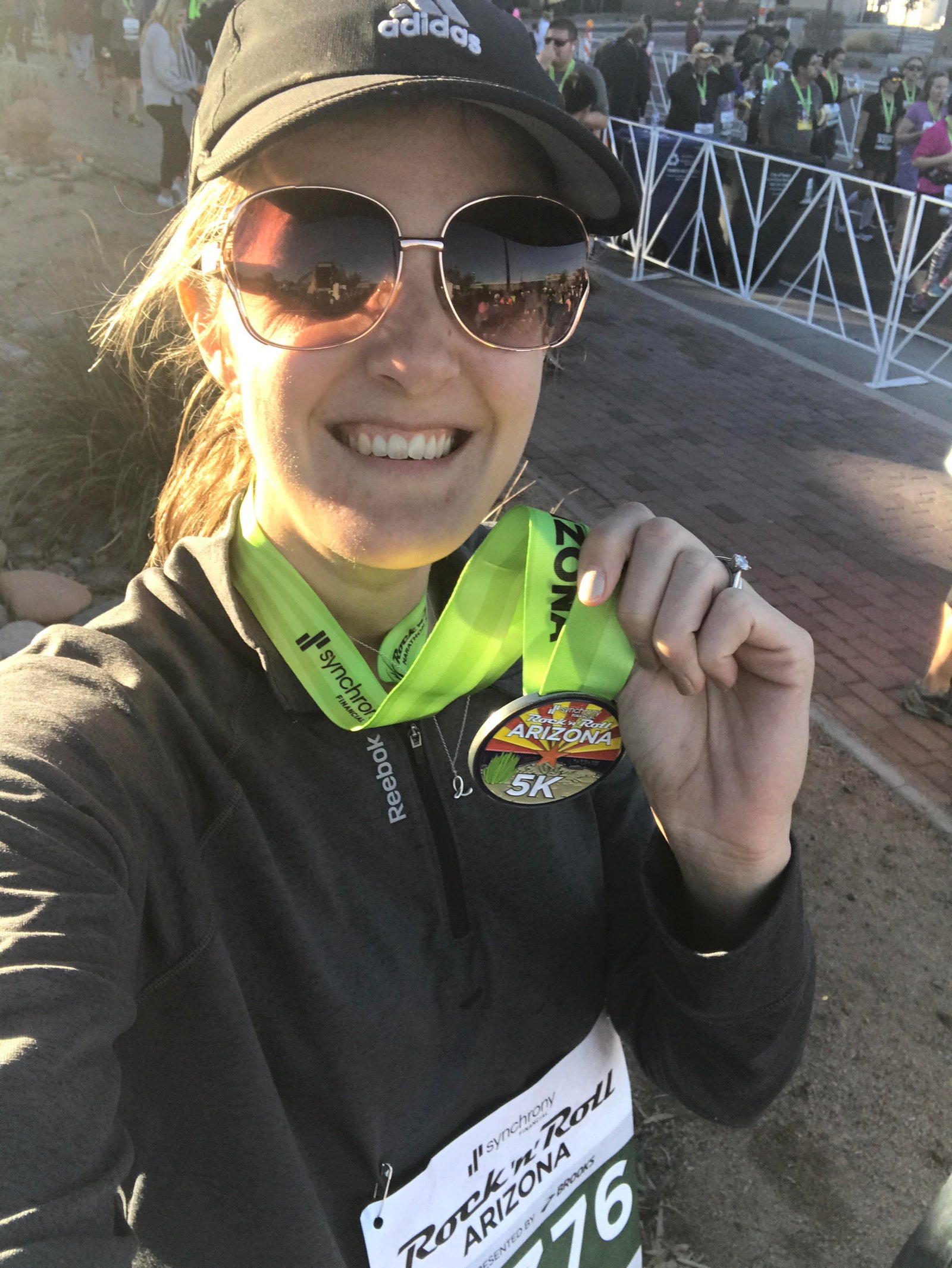 I wrote this blog at the top of a hill while trying not to vomit. Well, that’s where I thought of the title anyway. This year, I started running. And if that doesn’t impress you, then you don’t know me very well. I am the least athletic person I know. In elementary school kids teased me about my inability to do a cartwheel. In middle school basketball games, my dad paid me a quarter every time I actually touched the ball. In high school I got a varsity letter jacket…in marching band. Please do not let my poise on the keynote stage fool you. I know my strengths. The gym ain’t one of them.
My Running Journey
So I want you to keep my physical fitness “history” in mind when I tell you that on September 14th, I put on the only pair of athletic shoes I have ever purchased and started running. I used an app called “Couch to 5K” and you guys, it does exactly that. In 3 runs per week for 9 weeks it took me from behind my laptop, to the starting line of my first 5k race.
I only had ONE goal: Don’t. Stop. Running. I didn’t care how long it took, I just wanted to finish the race without walking and I did. I finished in just over 32 minutes, which isn’t horrible for a new runner, and I was pretty proud of myself.
Next Goal
Then I needed a new goal. I decided if I could do my first race in 32 minutes maybe I could try a bit harder and do the next in under 30. This time, I “trained” a little more (meaning I Googled “how to run faster” and begged my athletic friends for help.) I slowly made progress.
After 6 more weeks I found myself on the starting line of race #2. This time, I was wearing real running clothes, had a distance tracker talking in my ear, and had TWO goals: Don’t stop running AND finish in under 30 minutes.
Race Day
Off we go! The entire first mile was up a steady hill. Psh. Nailed it. By mile marker 2 I was barely even tired. My app told me I was making great time. I was going to do it!! But by 2.5 miles I had a side cramp AND another hill to go. I was the delirious lady muttering “don’t stop…don’t stop…don’t stop” the whole way up the hill. When I got to the top, I didn’t know how I was going to finish. I felt like I was going to throw up. I knew I’d gotten caught up in the excitement of the race and had overdone it. I knew I needed to stop but couldn’t bear the thought of missing one of my goals. I knew that many runners here were using this 5k as their warm up to the marathon the next day. I was failing at their…..WARM UP.
I glanced at the photographer on the side of the road and thought, “You know what? He really doesn’t look like he needs to pick up a passed out runner today…” So….I stopped. I stopped running and caught my breath as I counted to 20. As I counted, I looked over at the curb and thought, “Who cares. I already missed my goal, I might as well just sit down.”
Slow Down to Speed Up
I ALMOST sat on that appealing block of concrete, but, I kept going. Mostly because that photographer was still standing there and I didn’t need a picture of my failure to show up on the internet somewhere. I started running again, a bit slower, but feeling MUCH better. As I rounded the bend to the finish line, I saw the finish clock click over to 28 minutes.
Are you kidding me?!?!” I thought. “I was on track to finish in 27 minutes and I blew it by stopping? The second number in my time could have been a 7 and now it’s going to be an 8?” But then, as I crossed the finish line I realized that I WASN’T on track to finish in 27 minutes. I was on track to pass out at the top of that hill. Stopping enabled me to finish. Knowing when to slow down enabled me to speed up.
The Time Management Connection
So what’s this all got to do with a time management blog? Plenty. We find ourselves at the top of that hill all the time. We push ourselves. We think that if we do just ONE more thing we’ll get there (wherever “there” is.) We think one more hour of work, one more Saturday at our computer, one more skipped lunch break will finally get us caught up so we aren’t drowning anymore. Success requires hard work, persistence, and dedication, but it also requires a frequent step back, a break, and some “time away.”
How many times have you been at your breaking point with a task, stepped away in frustration, only to succeed much more easily next time with a clear head? What if that step away time wasn’t viewed as a failure? What if we viewed it as just part of the process? A natural part of moving forward? It’s truly what The Time Diet is all about. We can’t expect to push ourselves 24/7, then expect ONE 3-day weekend to somehow reset all the stress from the past 6 months.
The Time Diet is all about balance. A delicate balance of meats (difficult things), vegetables (easy things) and desserts (fun things.) Of course some days will be more “meat heavy” than others, but we need to schedule those desserts frequently, even if they are short, or we risk throwing up and keeling over at the top of that hill (or whatever the analogous time management version of that is.)
The Future
I finished my 2nd 5k in 28 minutes 24 seconds- more than a minute and a half under my goal. I came in 432nd place out of 2,100 people who ran that day. The winner finished in 15 minutes. I have friends who run full on marathons like it’s no big thing, but I still strut around my living room like I’m the next Usain Bolt because this WAS a big thing for me.
I’m going to keep running. I have another 5k in February and want to do a 10k and MAYBE up to a half marathon eventually. I’m also going to keep up the insane pace at which I live my life, because I thrive on it, but I’m also going to continue to rest, frequently, since there is always another hill coming up and I’d like to be ready for it.
You Can Do It Too
Want to start running? I bought this Couch to 5K App these ASICS running shoes and signed up for whatever 5k was 9 weeks from when the shoes arrived.
Are you a student looking to improve your time management? Check out this awesome time management workbook to help bring balance and order to your hectic schedule.
Are you an adult with a crazy life looking to balance it all? Check out The Time Diet: Digestible Time Management

Thanks all! See you at the starting line.
How Whole30 Helped My Time Management
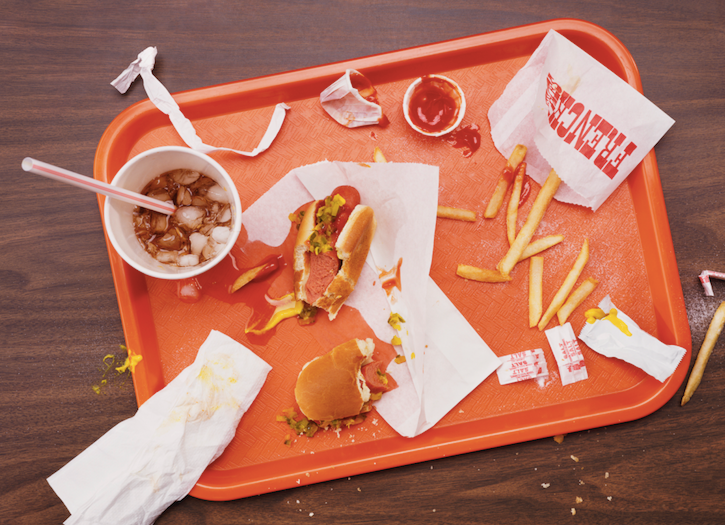 My New Year’s resolution was to eat better. (I know. I pride myself on my originality.) I suppose I’m fortunate in that my problem wasn’t a love of super sized McDonald’s meals or an addiction to Krispy Kreme donuts. My problem was time.
Now, before I go any further, I need to emphasize strongly that this is not a blog telling you how to lose weight. I deal with that confusion frequently with just the name of my website, (“oooo The Time Diet! Is she going to tell me how I can take inches off my waist by looking at a clock more?) and I recognize that writing a blog about an actual diet might only add to that confusion. So I just need to trust you, dear reader, that if at any point in the following paragraphs you start to think “hm, did Emily start writing a healthy eating blog instead of a time management one?” you will stop yourself and say “No. Bad self. If Emily ever started a healthy eating blog that would mean she’d probably have to give up her frequent consumption of cheese and ice cream and we all know that ain’t gonna happen.”
Now, where was I…
My problem with eating was the same that many people face- I didn’t carve out any time to think about it. On Sundays, I meal plan healthy dinners for my family that I can make quickly after a day of work. I get healthy lunch makings for the kids so they can have lovingly prepared, well balanced meals that they refuse to eat at school. But I never plan for ME.
My Problem
When I caught myself running out the door one morning with a rolled up tortilla for breakfast and 5 frozen chicken nuggets in a baggie for lunch I had to stop myself. Nothing makes you take a hard look at your life quite like 5 frozen chicken nuggets sitting in your purse.
I realized at that moment that my bad eating habits didn’t have anything to do with “not eating enough fruits and veggies” and everything to do with “not making time to PLAN my fruits and veggies.” I knew I needed a change.
After researching a few different healthy eating plans, I settled on Whole30. If you’ve never heard of Whole30, it’s basically an eating challenge where you eat nothing delicious for 30 days and try not to cry. (Technically, it’s no dairy, no added sugar, no alcohol, no grains, nothing processed, and a whole bunch of other rules you can read about on the Whole30 Website)
I like that there were rules. I do well with rules. I liked that it was a defined time period, not a life long commitment. I can do anything if it’s only for 30 days, I’m quite sure. I also liked their “stop complaining and eat the damn carrot” attitude they have on their website. It’s sassy. I like sassy people.
Healthy Eating Takes Planning
After 2 hours of being on Whole 30, I realized just how little time I had put into planning what food I was going to put in my mouth. With all of these rules in place, it’s impossible not to plan. When I walked into the grocery store, I had to know what I was going to eat, for breakfast, lunch, and dinner for the next 7 days. I also found, surprisingly, that the prep and planning didn’t take as much time as I thought it would. Here are some things I did to cut down on time:
1.Use cookbooks and recipe cards
This might sound obvious, but it seems that half the stress and time of planning involves remembering what types of things you have available to eat. With a cookbook, I can easily flip through the pages and say “do I want this one or this one? This one or this one?” I also wrote down on a piece of paper 10 things I enjoy eating for lunch or breakfast so when I’m planning and shopping I can say “I want to eat this, this, and this for the week. Done.” I know it sounds like such a simple and obvious thing, but storing that information on paper rather than in my brain took far less time and freed up a lot of “hard drive” space for other things.
2.Get better food storage containers
Again, this may sound trivial, but it really helped. A huge part of success was prepping/chopping a lot of things during the weekend to have during the week. For example, cutting up a bunch of red pepper to throw on salads, boiling a bunch of eggs to eat as snacks, etc. Literally every food blog ever says to do this, but I never really did, in part because I didn’t have anywhere to put them. My old Tupperware collection was a travesty to kitchens everywhere. Nothing matched, no lids fit, etc.
Prepping became so much easier, faster, and more satisfying when I got a new set of storage containers. Everything was the size I wanted. Everything had a lid. Everything fit nicely in the fridge. None had someone else’s name from 3 lifetimes ago Sharpie-d on the bottom.
3.Have a plan for every item
My old approach to eating was “well, if I have healthy stuff in the house, I’ll be sure to eat it.” I didn’t make time to meal plan, ended up at the grocery store with only a vague idea of what I wanted to eat, threw a bunch of stuff that looked kind of healthy in my cart…and ended the week with a bunch of rotting fruit, and 5 receipts from Chipotle.
A HUGE thing that helped me with this was Fry’s ClickList. If you’re unfamiliar with ClickList, it’s a service that lets you order your groceries online, and pick them up at a time of your choosing at participating Fry’s Grocery. It is certainly not the only service like this, and I’m sure other ones are good too. This finally helped me make time to plan because I literally do my grocery shopping in my pajamas on Saturday nights (I’m real fun at parties, can’t you tell?)
Follow Up
I’ve been done with Whole30 for a few months now, and I’m happy to say that a lot of the good habits have stuck. Not all of them. I still have to snap myself back into shape sometimes, but overall, I find myself purposefully making time to think about what I’m going to eat, which was the whole point of all of this. My big take away was that healthy eating doesn’t just…..happen. It’s a thing that takes time, just like any other important thing in your life takes time, but being efficient about it, and making it a habit, helps make it easier.
Like the blog? You’ll love the book! Check out The Time Diet: Digestible Time Management and The Time Diet: Time Management for College Survival on Amazon. Do it. Do it now.

Time Management Book for Students

Available on Amazon.com for $12.99
Making Time Now To Save Your Career Later
 Did you learn something new today? What was the last “skill” you added to your LinkedIn profile? Have you made the time to keep a connection alive recently? I read an article today that caused me to ask myself those questions, and it inspired me so much that I stopped scrolling through Facebook, got off the couch, and wrote a blog about it.
Yeah, it’s been a while
First off, let’s address the elephant in the room. It’s been a while since my last blog. I recognize the irony in a time management blog being super late, but I decided I needed to follow my own advice. We are never “too busy” to do anything. We all have the same number of minutes in the day, and as each one ticks by, we choose how to spend them. I have not chosen to spend them blog writing recently.
I’ve taken on about a billion other side projects (and, oh yeah, had that second baby) and other things have been more important. I decided, that rather than fight writer’s block every weekend and try to conjure up a blog when I’m feeling uninspired, I’ll post less frequent, but better blogs. So just know, that when you see a blog from me now, it’s because I really REALLY wanted to write it and felt inspired to share some wisdom with you. That’s how I feel right now.
6 Ways to Future Proof Your Job
I read an article today called “6 Ways to Future-Proof Your Job” and it really spoke to me. Sometimes I wonder why I relish my “side hustle” so much. “Oh goodness” I think. “Why can’t I just go to work at 8, leave work at 5, and then just….be…in between those times.” But this article reminded me why I love it so much.
When you pursue side projects, you stay educated, you make connections, you keep yourself fresh, and you never feel complacent. The article makes a great case for WHY to do those things, but what it doesn’t mention is that all of these things take TIME.
Finding Time To Learn
Yes, keeping your skills sharp takes time, but it’s time well spent. I like how this article makes it clear that what we do outside of our jobs is also….our job. It’s our job to keep learning. It’s our job to stay curious. It’s our job to pursue our passions both in and out of the workplace. It’s not an “extra” thing, it’s THE thing.
I’m not advocating we work 24/7, because goodness knows, I need some Netflix sometimes. For example, Frank Underwood is doing something super devious RIGHT NOW on House of Cards but I have no idea what it is because I’m writing to you all right now instead. (No spoilers!!!! I’m only on season 2.) Family time is a must. “Me time” is a must. Relaxation is a must. But those things don’t have to be completely separate from being curious.
Take the family to a museum.
Read a book on the couch.
Heck, watch a documentary.
Learn something. And don’t be afraid to apply it. Meet someone, and don’t be afraid to learn more about what they do. I want to be better at this. Thanks for the reminder.
Love Emily’s Blog? You’ll love her books! Check out her latest: Time Management Workbook For Students
How to Save Time with Great Trainings
 Are you an expert at something? Or do you know even a little bit more about a topic or process than your fellow colleagues? Then you have probably been asked to put together a “training” before. Make sure this training is not a colossal waste of everyone’s time by keeping the following things in mind.
Training is a Tough Job
First off, remember that people who teach or train have usually gone to school to study this. They have spent years studying in both a classroom and on the job about learning principles, adult learning theory, motivation, assessment, classroom management, etc. If you’re feeling a little overwhelmed, it’s totally normal.
You know training isn’t your strong point, but you also know that everyone looking at this meeting invite is rolling their eyes thinking “oh great, THIS will be such a waste of time.” You don’t have to go get a teaching certificate to prove them wrong. Just design your training with these three things in mind:
1. What exactly do you want them to DO? (Not KNOW)
Many times you’ll be asked to “teach everyone about XYZ” in your training, but that’s not what your boss is really asking for. What he/she really wants is for you to teach everyone about XYZ and then train them on what to do with that information. How to apply it, how to process it, how to use it to inform their decision making. Simply “knowing” something in the workplace isn’t all that helpful. Knowing how to apply that information is.
2. Have them practice what you want them to DO
Once you’ve identified and communicated what it is you want everyone to be able to do, you’ll save everyone a lot of time later by having them practice that process at the training. If you merely tell people how to do something, everyone will come back to you later with questions after they try to do it on their own (if they even remember what you said.) If you build a simulation or practice into your training, then everyone can learn by doing, which will not only ensure they are completing the process correctly, but also make them more likely to retain the information.
3. Decide how much of the process is important
Once someone learns how to do something, they may find their own way to do it. That’s OK! If after a training, someone is able to get the same result in the same amount of time by doing a different process, don’t be too quick to call it out as “wrong.” There are usually multiple ways to get to the same result so if their process doesn’t leave out crucial steps, then who cares if it’s a little different than the way you do it. Successful trainers give enough structure to make sure all steps are completed accurately, but give enough freedom for learners to work they way that’s easiest for them.
Get More Help
Want me to look over or help you with your training? Good news! I offer in-person coaching (in the Phoenix area) and over the phone coaching. Everything from tweaking an existing training, to coaching your delivery, or completely writing it for you. Email me at Emily@TheTimeDiet.org or check out my “public speaking services” for more info.